

As you enter Beynac-et-Cazenac, the road follows the Dordogne and then, suddenly, the cliff rises above the water. At the very top, clinging to the edge of the plateau, the Château de Beynac seems to keep watch over the valley, just as it has for more than eight centuries. The golden stone houses of the village tumble down the slope to the river, traditional gabarre boats glide below and, in autumn, the wooded hillsides turn russet and gold.
One of the most spectacular medieval fortresses in the Périgord Noir, Beynac Castle tells the story of rival barons, the Hundred Years’ War and the long restoration that brought it back to life. History, what to see, practical tips and ideas for exploring Beynac-et-Cazenac: here is our guide to making the most of this outing, about twenty minutes from the Château de Maraval.

Château de Beynac at a glance
Before going into detail, here are the essentials to locate the fortress and plan your visit.
- Where? In Beynac-et-Cazenac, in the heart of the Dordogne valley, about ten kilometres from Sarlat-la-Canéda.
- What? A 12th-century fortified castle perched on a limestone cliff about 150 metres above the river.
- Who for? Lovers of medieval history, families, photographers and anyone who enjoys sweeping views.
- How long? Allow around 1.5 to 2 hours to visit the castle, and half a day if you also want to explore the village.
- When? The castle is generally open from April to November: check the current opening times before you set off.
The history of Beynac Castle, sentinel of the valley
The Château de Beynac was built from the 12th century onwards by the barons of Beynac, one of the four great baronies of Périgord along with Biron, Bourdeilles and Mareuil. Its location is no accident: from the top of the cliff, the lords controlled the valley and the traffic on the Dordogne, a vital trade route in the Middle Ages.
Richard the Lionheart and captain Mercadier
When Adhémar de Beynac died in 1189, the King of England, Richard the Lionheart, handed the barony to one of his loyal captains, Mercadier, a feared mercenary leader. The episode was short-lived: Mercadier was murdered in Bordeaux in 1200 and the Beynac family recovered its fief.
Beynac versus Castelnaud during the Hundred Years’ War
In the 14th and 15th centuries, the Dordogne became a border between the Kingdom of France and the English possessions of Guyenne. Beynac sided with the King of France, while its neighbour across the river, the Château de Castelnaud, fell into English hands several times. The two fortresses face each other on either side of the river, and their rivalry is still one of the valley guides’ favourite stories. To discover the other side, read our article on Castelnaud-la-Chapelle and its castle (in French).
From decline to revival
The Beaumont-Beynac family kept the castle until 1961. The following year, Lucien Grosso bought it at auction and devoted the rest of his life to restoring it, work later continued by his wife Denise. Listed as a historic monument, the Château de Beynac is now one of the most visited sites in the Dordogne.
What to see when visiting Château de Beynac
You visit Beynac Castle at your own pace, through its halls, staircases and wall walks. On the plateau side, the fortress is protected by a double crenellated wall, a double moat and a double barbican. On the river side, the cliff alone was enough to discourage attackers.
The defences and the medieval kitchen
You first pass through the barbican, then discover the ramparts and wall walks, where you quickly understand why the castle was considered impregnable. Inside, the 13th-century medieval kitchen, with its stone vaults and hearth, helps you picture the daily life of the garrison.
The Hall of the Estates and the frescoed oratory
The great Hall of the Estates of Périgord once welcomed the nobility of the four baronies. Its Renaissance fireplace, wood panelling and painted 17th-century ceilings give it a solemn atmosphere. Right next to it, the small oratory is one of the treasures of the visit: its walls are covered with 15th-century frescoes, including a Pietà, a Saint Christopher and a Last Supper in which Saint Martial plays the role of steward.
The keep and its view over the Dordogne
The highlight is the climb to the keep. From the crenellated terrace, the 360° view takes in the whole valley: the loop of the Dordogne, the châteaux of Castelnaud, Marqueyssac and Fayrac, the fields and forests of the Périgord Noir. The panorama is rated three stars by the Michelin Green Guide, and you will understand why within seconds.
A film set
If Beynac Castle looks familiar, that is no surprise: it has been used for many film shoots, including Les Visiteurs 2, Luc Besson’s Joan of Arc, Lasse Hallström’s Chocolat, Ridley Scott’s The Last Duel and, more recently, the series Fortune de France.
Our tips for visiting Château de Beynac
A few simple habits will help you enjoy the fortress to the full:
- Check opening times before you go. Opening periods and prices vary with the season: see the Château de Beynac page on the Dordogne Périgord Tourisme website or contact the castle directly.
- Choose your car park. You can park at the bottom of the village and walk up through the lanes, or use the car park at the top, near the castle.
- Wear good shoes. Cobblestones, spiral staircases and wall walks call for sure footing.
- Come early or late in the day. Low-angled light brings out the colour of the stone and the valley, and there are fewer visitors.
- Think about autumn. In October and during the French autumn school holidays, the valley is ablaze with colour and the atmosphere is calmer than in midsummer.
What to do in Beynac-et-Cazenac after your visit
The castle is only part of the pleasure. Beynac-et-Cazenac is listed among the most beautiful villages of France in the Dordogne (article in French) and deserves time.
- Wander down the village lanes: between the castle and the river, cobbled paths wind between stone houses, hanging gardens and viewpoints.
- Board a gabarre: in season, these traditional boats offer guided trips on the Dordogne, with a unique view of the cliff and the fortress.
- Stroll along the river: the riverbank offers a lovely view of the village and the castle, especially in the late afternoon.
- Taste local produce: walnuts, foie gras and, in season, ceps; Périgord specialities are on offer in the village shops and restaurants.
Other castles and villages to see around Beynac
The Dordogne valley has an exceptional concentration of castles and characterful villages. From Beynac, everything is just a few minutes’ drive away:
- La Roque-Gageac, a village nestled against its cliff on the riverbank, featured in our guide La Roque-Gageac, jewel of the Périgord Noir (in French).
- Château de Castelnaud, the eternal rival, home to a museum of medieval warfare.
- The gardens of Marqueyssac, with their clipped box trees and belvedere above the valley.
- Château des Milandes, Joséphine Baker’s Renaissance home, presented in our article visiting the Château des Milandes.
- Domme, a hilltop bastide town offering one of the finest panoramas in the region.
To plan your route and find out what is on, the Sarlat Périgord Noir tourist office is a valuable resource.
Visiting Château de Beynac from the Château de Maraval
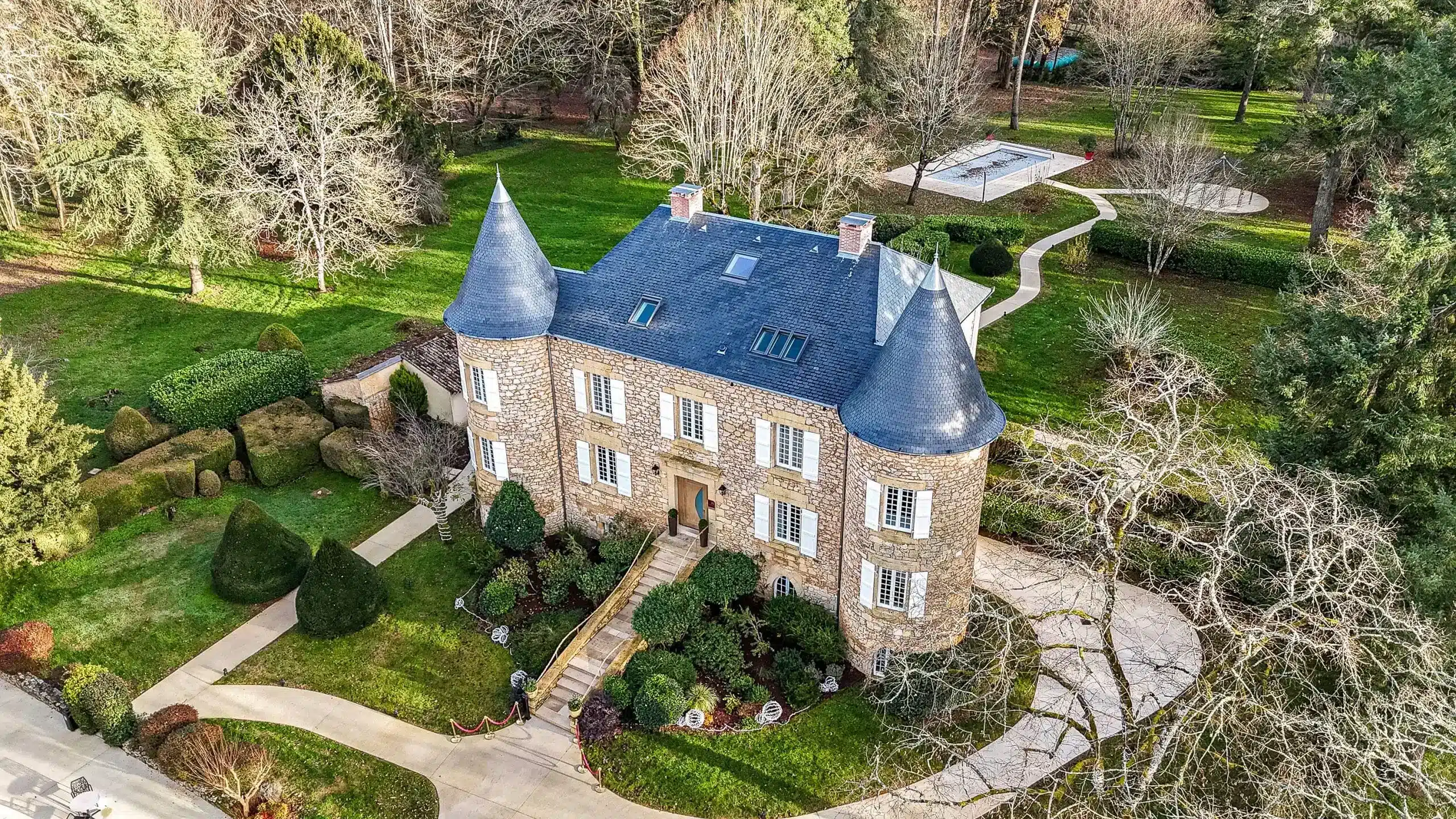
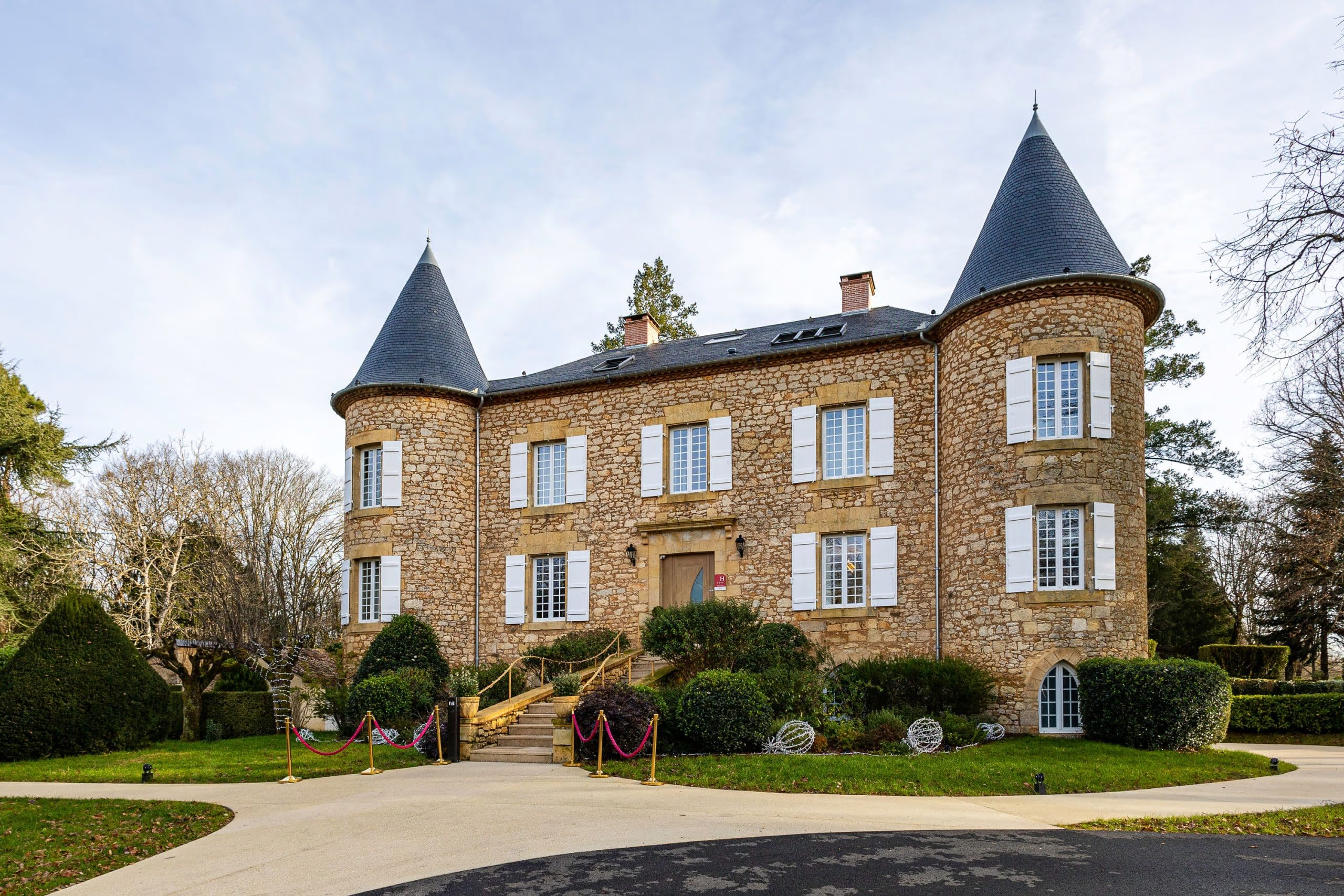
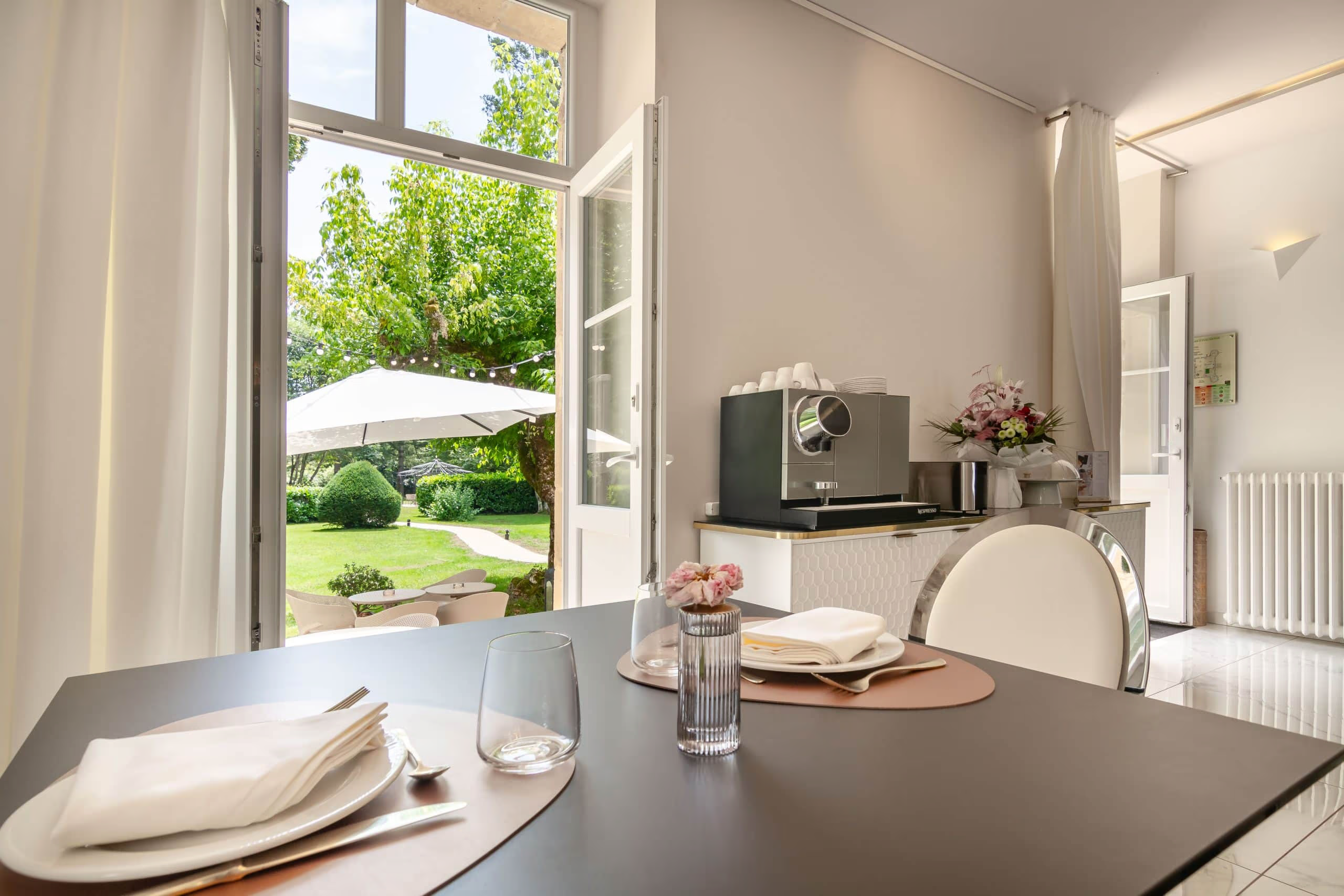
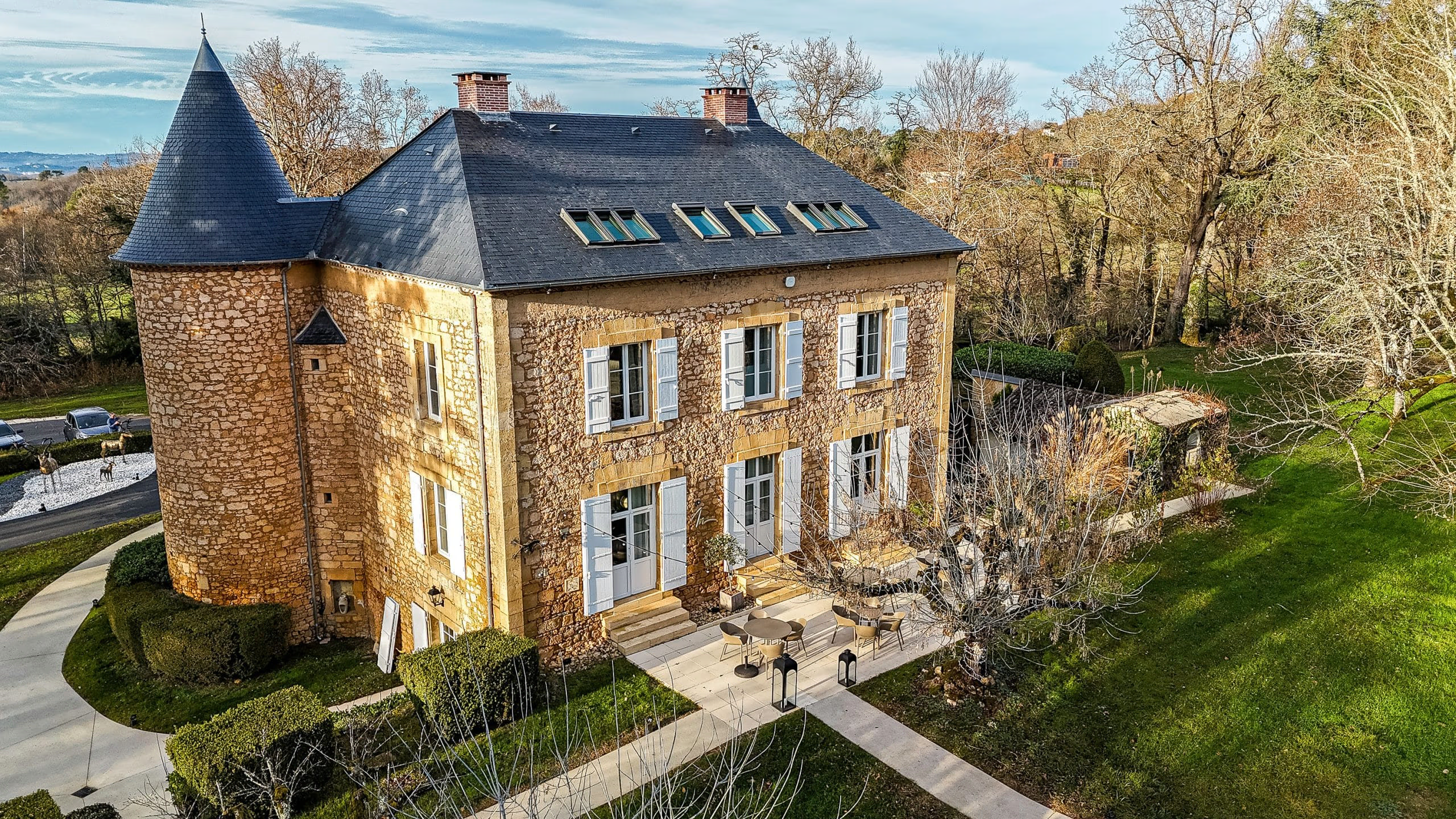
Nestled in the heart of the Périgord Noir, in the commune of Cénac-et-Saint-Julien, the Château de Maraval is an ideal base for discovering Beynac Castle and the whole valley of castles. You can set off after the buffet breakfast, served every morning from 8 am to 10.30 am, visit the fortress in the morning, have lunch in the village and continue to La Roque-Gageac or Castelnaud in the afternoon.
Back at the hotel, it is time to relax. Our spa in the Dordogne awaits you with its wooden sauna in the garden, its jacuzzi and massages on request, in a space that can be fully privatised. The 12-hectare park also invites you to take a quiet walk among the oak trees and make the most of the mild autumn days.
In the evening, there is no need to get back in the car: you can dine on the estate with Chef Fabrice’s seasonal menu or, on reservation, enjoy tailor-made cuisine by our private chef. All our options are presented on the Chef & Gastronomy page.
With just eight rooms and suites, the Château de Maraval, a 4-star boutique hotel, offers an intimate atmosphere far from the bustle. Our team will be happy to help you plan your visit to the Château de Beynac and the rest of your stay in the Périgord Noir. Book your stay at the Château de Maraval now and experience the Dordogne valley from a castle, by day and by night.
Frequently asked questions about Château de Beynac
How long does it take to visit Château de Beynac?
Allow around 1.5 to 2 hours to visit the Château de Beynac: the barbican, wall walks, medieval kitchen, Hall of the Estates, oratory and keep. Plan for half a day if you also want to wander down the lanes of Beynac-et-Cazenac or take a gabarre boat trip on the Dordogne. In high season, the visit can take a little longer.
What war set Beynac against Castelnaud?
Beynac and Castelnaud were rivals during the Hundred Years’ War, in the 14th and 15th centuries. At the time, the Dordogne formed a border between the Kingdom of France and English-held Guyenne. Beynac sided with the King of France, while Castelnaud, directly opposite, fell into English hands several times. This rivalry still shapes the reputation of both castles today.
What is there to do in Beynac-et-Cazenac?
In Beynac-et-Cazenac, start with the castle and its keep, which offers an exceptional view of the valley. Then stroll through the cobbled lanes of this village, listed among the most beautiful in France, take a gabarre boat trip on the Dordogne in season, and easily continue to La Roque-Gageac, Castelnaud or the gardens of Marqueyssac.
Which films were shot at Château de Beynac?
Château de Beynac has been the setting for many film shoots. It appears in Les Visiteurs 2 by Jean-Marie Poiré, Joan of Arc by Luc Besson, Chocolat by Lasse Hallström, Fanfan la Tulipe by Gérard Krawczyk and The Last Duel by Ridley Scott. More recently, it featured in the series Fortune de France, broadcast in 2024.
How do you get from Beynac-et-Cazenac to Sarlat?
Beynac-et-Cazenac is about ten kilometres from Sarlat-la-Canéda, roughly a fifteen-minute drive; a car is the most practical way to get around the valley. From the Château de Maraval, in Cénac-et-Saint-Julien, allow about twenty minutes to reach Beynac along the Dordogne via La Roque-Gageac.