

Deep in the Vézère valley, in Montignac, a long building of glass and concrete slips into the foot of a wooded hill. This is Lascaux 4, the International Centre for Cave Art, where you can discover the Lascaux cave just as the four young people who found it in 1940 first saw it. Bulls, horses, stags and bison emerge from the half-light with breathtaking precision.
The original cave is too fragile to welcome visitors and has been closed to the public since 1963. Lascaux 4 offers a complete replica, together with discovery areas that explain how these paintings were created some 20,000 years ago. History, how the visit works, practical tips and ideas for exploring around Montignac-Lascaux: here is our guide to making the most of this day in the Périgord Noir, from Château de Maraval.
Lascaux 4 at a glance
Before going into detail, here are the essentials to help you plan your visit.
- Where? In Montignac-Lascaux, in the Dordogne, in the Vézère valley, at the foot of the hill that hides the original cave.
- What? A complete replica of the Lascaux cave, plus a workshop, digital spaces and a 3D film.
- Who for? History lovers, families, art enthusiasts and anyone who wants to understand prehistory without being an expert.
- How long? About 1 hour 30 minutes for the guided tour of the replica, and half a day to enjoy the whole site at a relaxed pace.
- From Château de Maraval? About 30 km, or a 35-minute drive.
The Lascaux cave, an extraordinary discovery
The story begins in September 1940. Four teenagers from Montignac, Marcel Ravidat, Jacques Marsal, Georges Agniel and Simon Coencas, explore a hole that has opened up on the Lascaux hill. Squeezing underground, they find walls covered with animal paintings of astonishing freshness. Their former schoolteacher, Léon Laval, is alerted, and then Abbé Henri Breuil, a leading prehistorian, comes to authenticate the discovery.
The Lascaux cave was listed as a historic monument in December 1940 and opened to the public in 1948. Its success was immediate: nearly one million visitors came in fifteen years. But the carbon dioxide, humidity and light brought in by the crowds caused algae and deposits to appear on the walls. In 1963, André Malraux, then Minister of Cultural Affairs, decided to close the cave to the public.
To keep sharing this treasure, several replicas were created:
- Lascaux 2, opened in 1983 a few hundred metres from the cave, reproducing its two most famous chambers;
- Lascaux 3, a touring exhibition shown in many countries from 2012;
- Lascaux 4, inaugurated in December 2016, offering a complete replica of the cave for the first time.
Since 1979, the Lascaux cave has been a UNESCO World Heritage Site, together with the prehistoric sites and decorated caves of the Vézère valley.
What can you see in the Lascaux cave?
It is often called the “Sistine Chapel of prehistory”: along a few hundred metres of galleries, the Lascaux cave holds nearly 600 paintings and around 1,500 engravings. The artists used mineral pigments such as ochres and iron and manganese oxides, applied with fingers, pads or brushes, or blown onto the rock.
The horse is the most frequently depicted animal, but it is often the aurochs of the Hall of the Bulls that leave the strongest impression, some of them several metres long. You will also see stags, bison, ibex, a strange creature nicknamed “the Unicorn” and many geometric signs whose meaning remains a mystery.
In the Shaft, a unique scene shows a bird-headed man facing a wounded bison: it is one of the cave’s rare human figures and one of the most discussed by researchers. The Lascaux 4 replica lets you discover all these treasures, including those that were not reproduced at Lascaux 2.
How does the Lascaux 4 visit work?
The building, designed by the Norwegian architecture firm Snøhetta, is partly buried so that it blends into the landscape. Visits take place in small groups, accompanied by a guide from start to finish of the guided route. A tablet handed out at the entrance acts as a visit companion and provides extra visual content.
The viewpoint and the Lascaux cave replica
The tour begins on the roof of the building, with a view over the Vézère valley and the Lascaux hill. You then walk down towards the entrance of the cave, immersed in the atmosphere of 1940. Then comes the highlight: the replica itself. Coolness, half-light, silence, the relief of the walls: everything is designed to recreate the sensations of the original cave.
You pass through the Hall of the Bulls, the Axial Gallery and the Nave with its great panels. The guide helps you read the scenes, spot the engravings and understand how Palaeolithic artists played with the shapes of the rock.
The Lascaux workshop
As you leave the cave, the workshop presents life-size reproductions of panels that you can study up close and at your own pace. It is the perfect opportunity to linger over details that are hard to see in the half-light, such as engravings, overlapping figures or the famous Shaft scene. Interactive tables cover pigments, tools and dating methods.
The digital spaces and the 3D film
The rest of the visit is more free-flowing. Themed spaces tell the story of the cave from its discovery to current research, and a 3D film takes you to other decorated caves. The route ends with a reflection on Lascaux’s place in art, as it has inspired many 20th-century artists.
Lascaux 4 or Lascaux 2: which Lascaux cave should you visit?
We are often asked this question. For a first visit, Lascaux 4 is the most complete choice: the replica covers the whole cave and the interpretation areas give you all the keys to understand what you see. It is also the visit best suited to children, thanks to its varied formats.
Lascaux 2, older and more intimate, focuses on the Hall of the Bulls and the Axial Gallery. It appeals to enthusiasts who want to extend the experience. As its opening periods vary with the seasons, check the official Lascaux website before planning both visits on the same day.
Our tips for a successful visit to Lascaux 4
A few good habits are all you need to enjoy your visit:
- Book a time slot online. Visits take place in groups at set times. During school holidays, especially the autumn half-term, slots go quickly.
- Arrive a little early. Allow about fifteen minutes to park and collect your tickets and tablet.
- Bring a light jumper. As in a real cave, the air in the replica is cool, even in midsummer.
- Check opening times and prices before you go. They vary with the season, and only the official website is authoritative.
- Keep an eye on the weather. Lascaux 4 is a great outing on a grey day, as are the other ideas in our (French-language) guide things to do in the Dordogne when it rains.
In autumn, the Vézère valley turns copper-coloured and the roads are quieter than in summer. It is a lovely season to visit the Lascaux cave and then wander through the surrounding villages.
What to see around Montignac-Lascaux?
The Vézère valley has an exceptional concentration of prehistoric sites and characterful villages. To round off your visit to Lascaux 4, here are our favourite ideas:
- Montignac: the small town where the Lascaux story began, with old houses along the Vézère, ideal for a lunch break.
- Saint-Amand-de-Coly: its fortified abbey church and golden-stone lanes make it one of the most beautiful villages of France in the Dordogne (article in French).
- Saint-Léon-sur-Vézère: a peaceful village nestled in a bend of the river, with a lovely Romanesque church.
- La Roque Saint-Christophe: an impressive cliff-side troglodyte site, inhabited from prehistory to the Middle Ages.
- Les Eyzies: nicknamed the world capital of prehistory, it is home to the National Museum of Prehistory.
- The Parc du Thot, in Thonac: an animal park that makes the link with the animals depicted by the Lascaux artists.
To plan your days in the valley, the Lascaux-Dordogne Vézère valley tourist office publishes up-to-date events and practical information.
Visiting Lascaux 4 from Château de Maraval
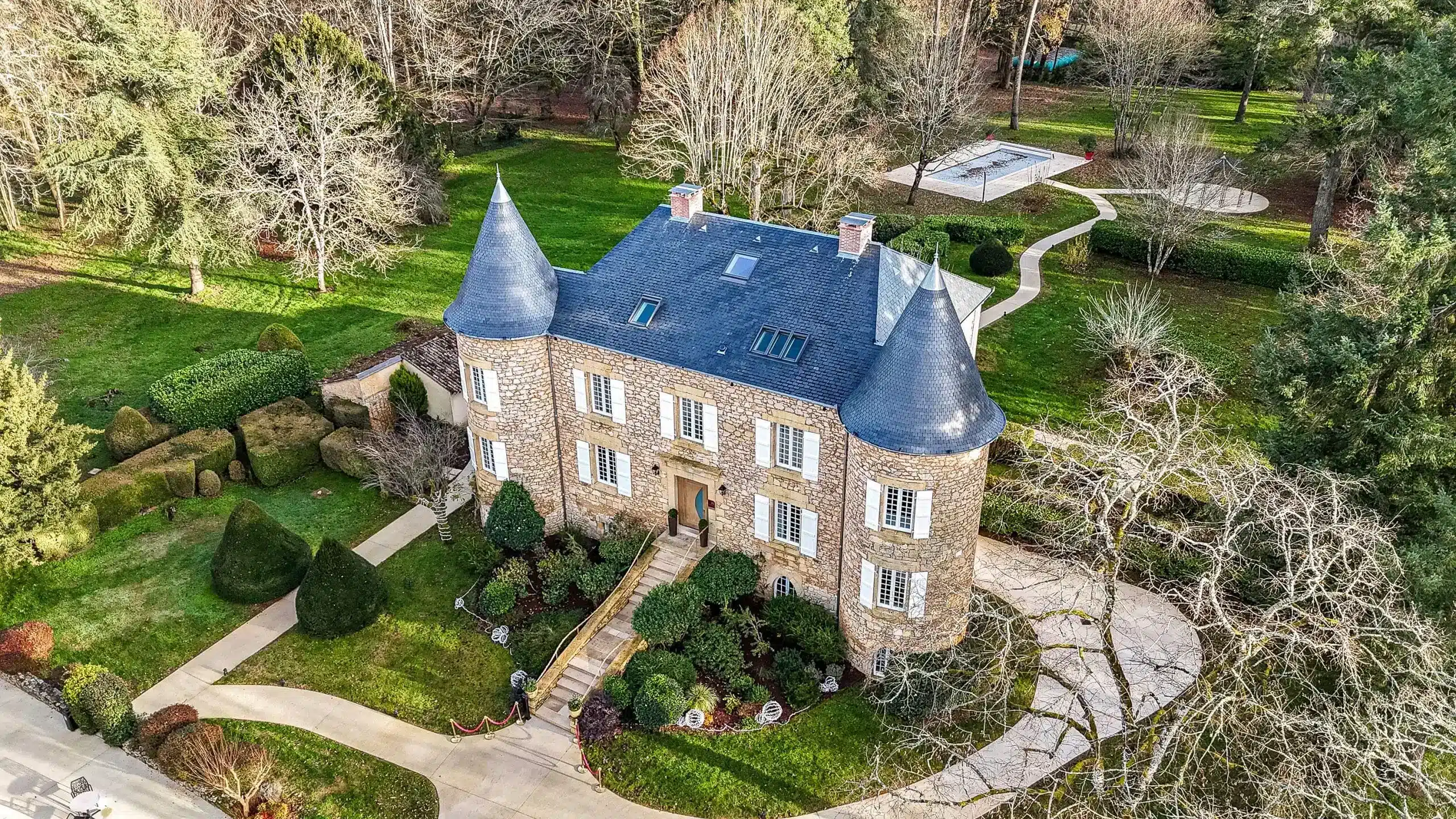
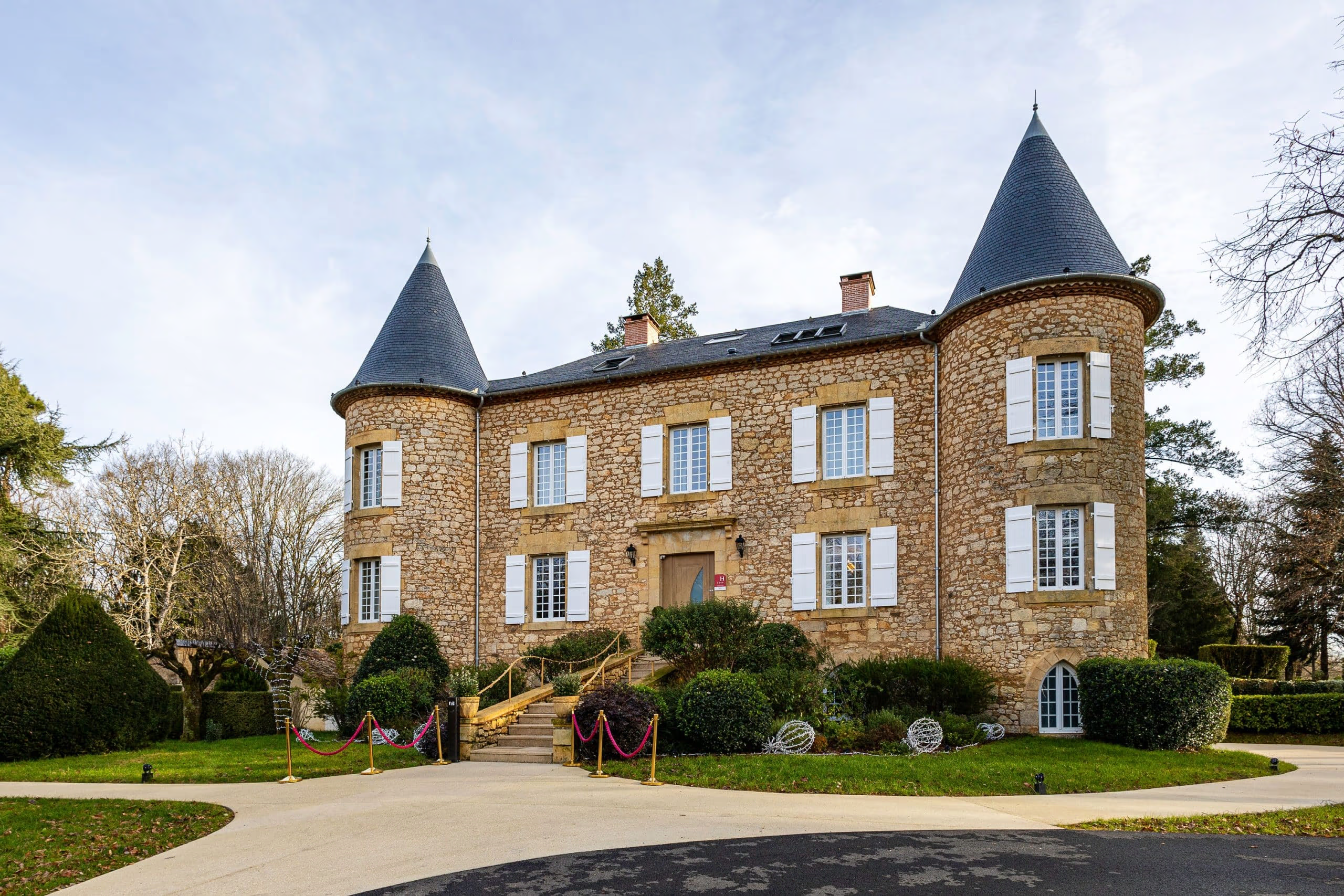
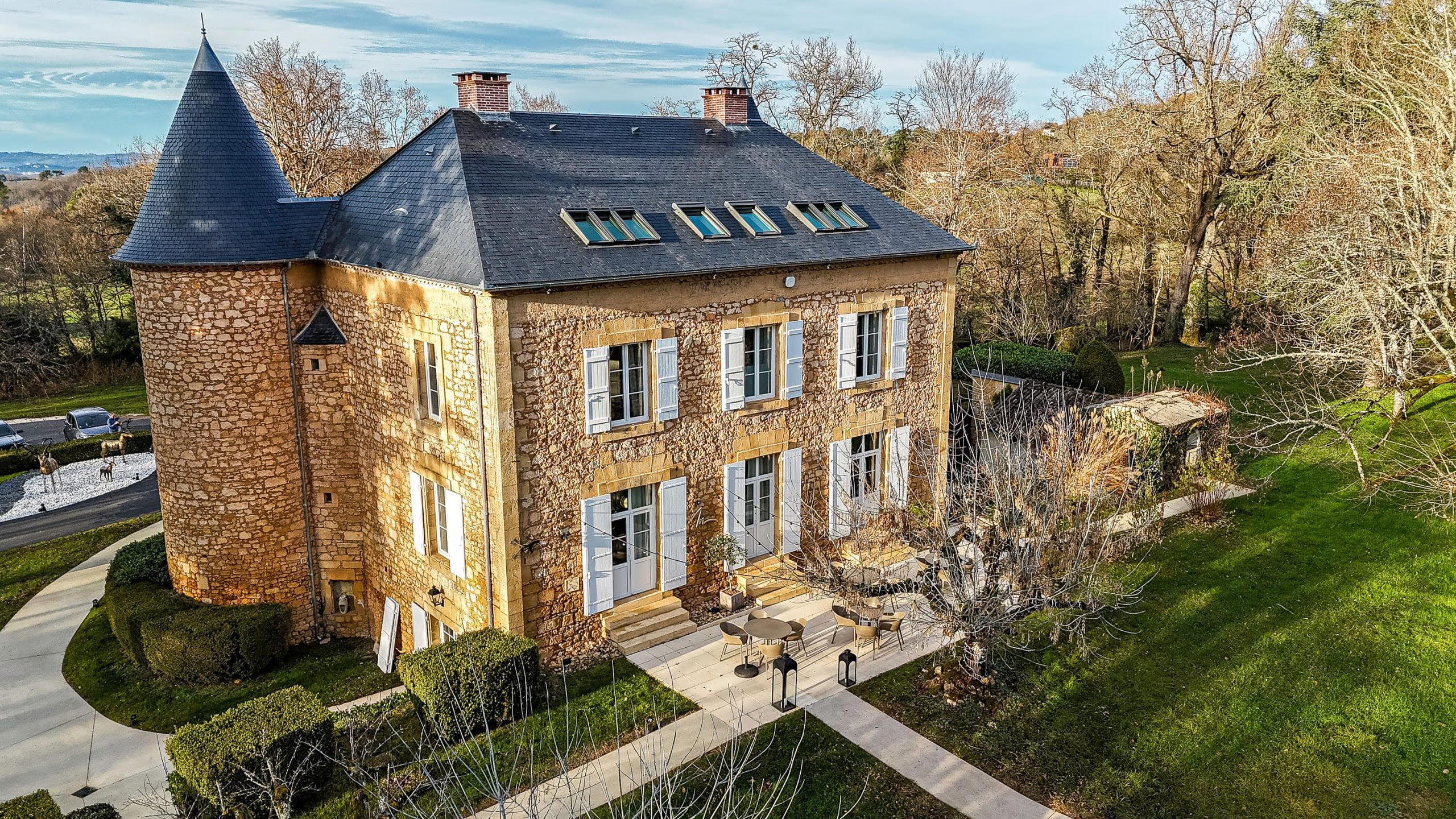
Nestled in the heart of the Périgord Noir, just a few minutes from Sarlat-la-Canéda, Château de Maraval is an ideal base for discovering the Lascaux cave: Montignac is about a 35-minute drive away. You can set off in the morning after the buffet breakfast, served every day from 8am to 10.30am, and be back by mid-afternoon.
After a morning underground, there is nothing better than enjoying our spa in the Dordogne: a wooden sauna in the garden, a jacuzzi and massages on request, in a space that can be entirely privatised. The 12-hectare park also invites you to stroll peacefully among the oaks.
In the evening, there is no need to get back in the car: you can dine on the estate with Chef Fabrice’s seasonal menu or, on request, enjoy tailor-made cuisine from our private chef. Discover our options on the Chef & Gastronomy page.
With its eight rooms and suites, Château de Maraval offers an intimate atmosphere, far from the bustle. Our team will be delighted to help you organise your visit to Lascaux 4 and plan the rest of your stay in the Vézère valley. Book your stay at Château de Maraval now and treat yourself to a 20,000-year journey, with the comfort of a charming 4-star hotel to rest in.
Frequently asked questions about Lascaux 4
Where is the Lascaux cave?
The Lascaux cave is in Montignac-Lascaux, in the Dordogne, in the Vézère valley in the Périgord Noir. Lascaux 4, the International Centre for Cave Art, stands at the foot of the hill that hides the original cave, about 25 km from Sarlat-la-Canéda. From Château de Maraval, allow about 35 minutes by car.
Who discovered the Lascaux cave?
The Lascaux cave was discovered in September 1940 by four teenagers from Montignac: Marcel Ravidat, Jacques Marsal, Georges Agniel and Simon Coencas. According to the best-known account, a dog led them to a hole in the hill. They alerted their former schoolteacher, Léon Laval, and Abbé Breuil then came to authenticate the paintings.
How old is the Lascaux cave?
The paintings and engravings of Lascaux date from the Upper Palaeolithic. The most recent dating places them around 21,000 years before present, although estimates still vary between studies. The cave has been a listed historic monument since December 1940 and a UNESCO World Heritage Site since 1979, together with the sites of the Vézère valley.
How long does it take to visit Lascaux 4?
The guided tour of the replica, in small groups accompanied by a guide, lasts about 1 hour 30 minutes. You then need to add time for the workshop, the digital spaces and the 3D film. Allow half a day to see everything without rushing, and book your time slot online, especially during school holidays.
Can you visit the original Lascaux cave?
No, the original cave has been closed to the public since 1963 to protect its paintings, which were damaged by visitor numbers. Only a few scientists enter it to study and monitor it. To see its paintings, you visit replicas: Lascaux 4, a complete replica inaugurated in December 2016 in Montignac, and Lascaux 2, the first copy, opened in 1983.